The 2026 Smart-Home Standards Landscape: HomeKit, Matter & Thread, and What Changed
Three names keep showing up on every box: HomeKit, Matter, and Thread. Here's how they actually fit together in 2026 — and why the distinction finally stopped mattering to most people.
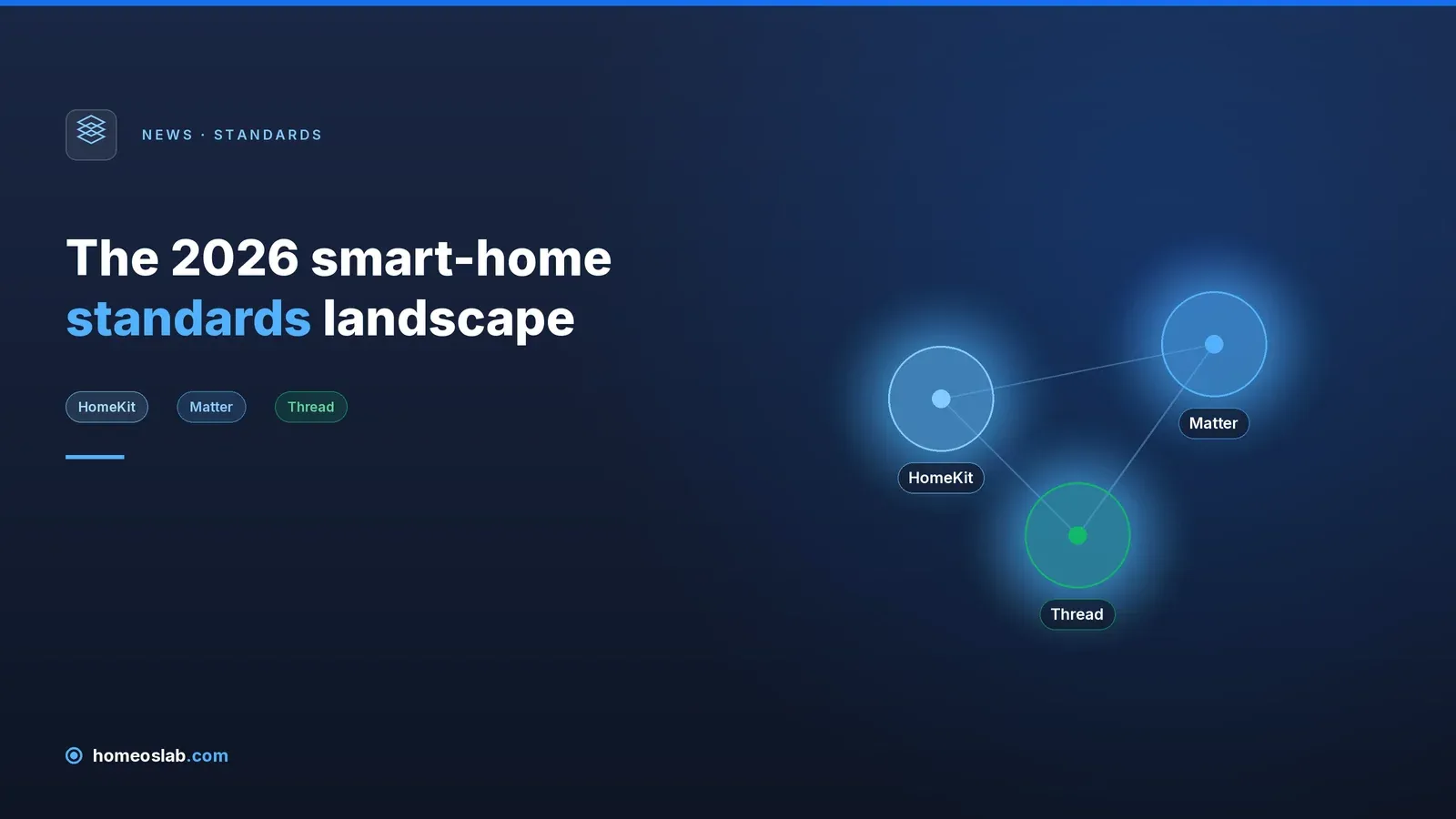
For years, buying a smart-home device meant reading the fine print for a logo that matched your phone. In 2026 that anxiety has mostly faded, and it's worth understanding why — because the three names on the box do very different jobs.
Thread is the plumbing. It's a low-power mesh network where each mains-powered device relays for its neighbors, so coverage improves as you add gear instead of degrading. It doesn't care what brand made the bulb.
Matter is the shared language. It defines what a "light," a "lock," or a "sensor" means so any controller can speak to any certified device. Matter runs over Thread for battery gear and over Wi-Fi for hungrier devices like cameras.
HomeKit is one of several controllers — the app-and-ecosystem layer where you organize rooms, build automations, and set who's allowed in. It now speaks Matter fluently, which is the real 2026 story: your choice of controller no longer dictates your choice of hardware.
What changed this year is less about new specs and more about maturity. Multi-admin sharing — one device living in two ecosystems at once — went from fragile to routine. Thread border routers quietly multiplied inside devices people already owned. And setup times dropped as the certification bar rose.
The practical takeaway: pick the controller whose app you enjoy, then buy on price and design. The standards underneath are finally boring — which, for a smart home, is the highest compliment there is.